Recorded last year at Pirouet's Munich studios, Marc Copland's Another Place is the first in a triptych series called "New York Trio Recordings" that has the onetime alto sax player making his case as a top American jazz pianist. Accompanied by guitarist John Abercrombie, bassist Drew Gress, and drummer Billy Hart -- the same lineup that coalesced around 1996's Second Look (Savoy) -- Copland makes a convincing argument. Together the established jazzmen inhabit a rich sonic landscape ranging from the ethereal to the supple and probe terrains beyond the horizon. The seven-track disc opens with Copland's "Like You" as a sparse number that begins to build in heightened intensity between piano and Abercrombie's guitar. It's an intricate conversation that reveals how years of playing together have allowed Copeland and Abercrombie to compliment each other in symbiotic improvisation. "River Bend" is an Abercrombie composition that begins with an atmospheric intro and segues into urgent piano progressions, stampeding drum rolls, and quasi psychedelic, hypnotic guitar flourishes that hint at Abercrombie's progressive, rock-influenced background. When things start to get a little trippy Copland's piano reigns in the rambling explorations by reverting to straight-ahead jazz lines. Of course the whole thing ends in controlled storming, with Hart smashing the cymbals and plodding staccato thwacks around Copland's chord crescendos and Abercrombie's lightning-fingered riffing. Midway things cool down a bit with "Dark Horse," a Drew Gress composition with subdued shades tinged in melancholy and bordering on the sublime. "Car Blue Lady," veers into a midtempo, finger-snapping groove sustained by sizzled drum loops and Copland and Abercrombie's tightly-crafted give and take. Next up the title track "Another Place," really showcases Copland's prowess on the piano. The disc ends with legendary songwriter Cole Porter's "Everything I Love" (1941). A standard from the American Songbook, it's given sanguine treatment in a translucent interpretation that lays the groundwork for some amazing discs to follow.
Monday, May 26, 2008
Pianist Marc Copland Levitates to Greatness
Recorded last year at Pirouet's Munich studios, Marc Copland's Another Place is the first in a triptych series called "New York Trio Recordings" that has the onetime alto sax player making his case as a top American jazz pianist. Accompanied by guitarist John Abercrombie, bassist Drew Gress, and drummer Billy Hart -- the same lineup that coalesced around 1996's Second Look (Savoy) -- Copland makes a convincing argument. Together the established jazzmen inhabit a rich sonic landscape ranging from the ethereal to the supple and probe terrains beyond the horizon. The seven-track disc opens with Copland's "Like You" as a sparse number that begins to build in heightened intensity between piano and Abercrombie's guitar. It's an intricate conversation that reveals how years of playing together have allowed Copeland and Abercrombie to compliment each other in symbiotic improvisation. "River Bend" is an Abercrombie composition that begins with an atmospheric intro and segues into urgent piano progressions, stampeding drum rolls, and quasi psychedelic, hypnotic guitar flourishes that hint at Abercrombie's progressive, rock-influenced background. When things start to get a little trippy Copland's piano reigns in the rambling explorations by reverting to straight-ahead jazz lines. Of course the whole thing ends in controlled storming, with Hart smashing the cymbals and plodding staccato thwacks around Copland's chord crescendos and Abercrombie's lightning-fingered riffing. Midway things cool down a bit with "Dark Horse," a Drew Gress composition with subdued shades tinged in melancholy and bordering on the sublime. "Car Blue Lady," veers into a midtempo, finger-snapping groove sustained by sizzled drum loops and Copland and Abercrombie's tightly-crafted give and take. Next up the title track "Another Place," really showcases Copland's prowess on the piano. The disc ends with legendary songwriter Cole Porter's "Everything I Love" (1941). A standard from the American Songbook, it's given sanguine treatment in a translucent interpretation that lays the groundwork for some amazing discs to follow.
Wednesday, May 21, 2008
Jorge Ben Jor Was Timeless at Miami's JVC Jazz Fest
www.liliamdominguez.com/
Jorge Ben Jor has always been ahead of his time. Moving freely between movements without ever committing fully to any one, he's done things his own way for more than four decades. A prominent figure in Brazilian music with more than thirty albums under his belt, Ben Jor is the country's most chameleonic singer/songwriter and one of its greatest musical alchemists. He is without a doubt every bit the urban poet he rightly claims to be. From the very beginning, during the early sixties' bossa nova boom, Ben Jor set himself apart, spurning the hushed cool of bossa in favor of a funkier, groove-driven hybrid. His first record, 1963's Samba Esquema Novo, which he so graciously signed backstage after his recent show in Miami, is a collection of swinging sambas melded with jazz horns, rock, funk, and rhythm and blues. The first track, "Mas Que Nada," has been covered more than 200 times by a panoply of artists around the globe and likely predated the Brazilian soul sound, minus the overt political edge, that would launch the Black Rio movement of the seventies. After bossa nova faded out Ben Jor contributed to the rock-infused Jovem Guarda scene and then later gave the Tropicália movement its Afro-Carioca injection. With the passing of each new wave of music in Brazil, Ben Jor has remained vital and culturally resonant among his peers and younger generations. A furiously eclectic songwriter, he continues to concoct bewitching brews that are never formulaic. His songs celebrate life, soccer, sexuality, carnaval, science, existentialism, Rio, beautiful women, and the historic black figures of Brazil (Zumbi and Xica da Silva, amongst others) who have blurred the line between myth and reality.
During the recent JVC Jazz Fest at Miami's Bayfront Park Amphitheater Ben Jor shared the bill with R&B singer Anthony Hamilton, Grammy-nominated artist Ledisi, and Sergio Mendes -- another Brazilian great. Ben Jor pounded out hit after hit song backed by a tight, seven-piece ensemble, A Banda do Ze Pretinho. To my delight and surprise he opened the set with the quirky "O Homem da Gravata Florida" ("The Man With the Floral Tie"), his homage to a medieval alchemist named Teofrasto Paracelso, infused by soulful sax and trumpet. The song is from one of my favorite albums, the awesomely mind bending, psychedelic, esoteric, and cosmic A Tábua de Esmeralda. Though it came a little late, in 1974 to be exact, it was Brazil's response to The Beatle's Sgt. Pepper and The Beach Boy's Pet Sounds. Next Ben Jor turned up the funk with "A Banda do Ze Pretinho," blending pulsing rhythms anchored in taut basslines. It was followed by the more melodic "Santa Clara Clareou," which segued into the wah-wah groove of "A Minha Menina," a song covered in the sixties by Sao Paulo band Os Mutantes and a few years ago by Brit outfit A Band of Bees. Of course there was "Mas Que Nada," which climaxed into a polyrhythmic explosion as all band members engaged in a percussive samba school rumble, pounding hand-held tamborims in unison with sticks. "Zumbi" was retrofitted as a reggae accented by the chekere and "País Tropical" took off on the synergy with some blues-rock riffs delivered by Ben Jor himself. The living legend ended his hour long set with the sultry "Spyro Gira" reminding fans that above all his jeito is gostoso and that music should start at the hips before penetrating the soul.
Monday, May 19, 2008
Luaka Bop's Brazil Classics Series Never Gets Old
Thursday, May 15, 2008
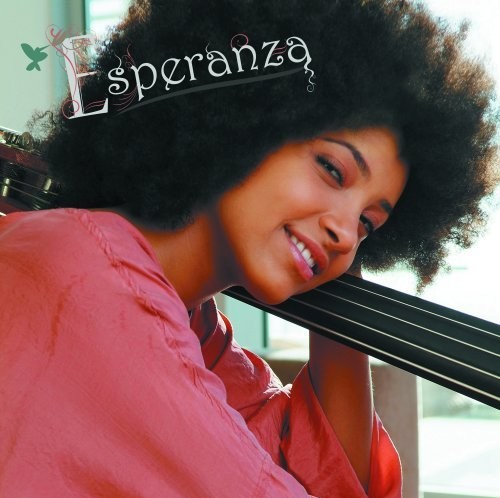
Esperanza Spalding Makes Jazz Hip Again
Subscribe to:
Posts (Atom)